
BIGBEAR
PHARMACEUTICAL
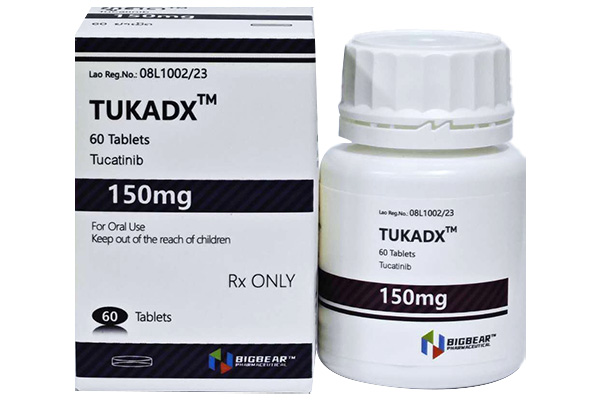
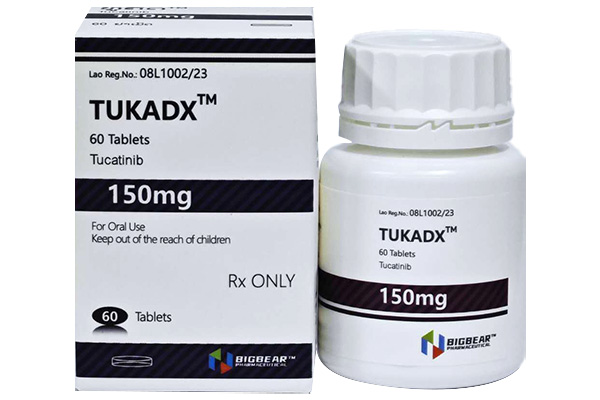
Tucatinib specifically targets the HER2 protein and inhibits tumor cell proliferation and growth by blocking its signaling pathways.

 AuthenticGuaranteeFast DeliveryPrivacy
 In combination with trastuzumab and other agents, tucatinib significantly enhances anti-tumor efficacy, providing a novel therapeutic option for patients with HER2-positive cancers.
1.In combination with trastuzumab and capecitabine, it is indicated for the treatment of adult patients with HER2-positive locally advanced or metastatic breast cancer who have received at least two anti-HER2 treatment regimens.
2.In combination with trastuzumab, it is indicated for the treatment of RAS wild-type, HER2-positive unresectable or metastatic colorectal cancer in patients who have previously received chemotherapy based on fluoropyrimidine, oxaliplatin and irinotecan.
Initiation and monitoring of tucatinib treatment must be conducted under the guidance of a physician experienced in the use of antineoplastic agents.
The recommended dose is 300 mg of tucatinib (two 150 mg tablets) orally twice daily, administered continuously.
It is used in combination with trastuzumab and capecitabine. The recommended doses for the combined medication are as follows: capecitabine 1000 mg/m² orally twice daily, administered on Days 1 to 14 of each 21-day cycle; trastuzumab administered intravenously (8 mg/kg on the first day as the loading dose, followed by 6 mg/kg every 21 days) or subcutaneously (600 mg every 21 days). The components of the treatment may be administered in any order. Tucatinib may be taken with or without food. Capecitabine should be taken within 30 minutes after a meal. Tucatinib treatment should continue until disease progression or unacceptable toxicity occurs.
If a dose is missed, the patient should take the next scheduled dose at the regular time.
Tucatinib is for oral use. Tablets should be swallowed whole and must not be chewed, crushed or split before taking. Tucatinib should be taken at the same time each day, with an interval of approximately 12 hours between doses, and may be taken with or without food. Tucatinib may be taken at the same time as capecitabine.
For patients with adverse reactions, dose adjustment of tucatinib is recommended according to the scheme below. For toxicities suspected to be caused by trastuzumab or capecitabine, refer to the corresponding Summary of Product Characteristics for dose adjustment.
Recommended starting dose: 300 mg twice daily
First dose reduction: 250 mg twice daily
Second dose reduction: 200 mg twice daily
Third dose reduction: 150 mg twice daily
If the patient cannot tolerate 150 mg orally twice daily, tucatinib should be permanently discontinued.
Grade 1 and 2: No dose adjustment required.
Grade 3, without antidiarrheal treatment: Initiate or intensify appropriate pharmacotherapy. Interrupt tucatinib treatment until recovery to ≤ Grade 1, then resume tucatinib at the same dose level.
Grade 3, with antidiarrheal treatment: Initiate or intensify appropriate pharmacotherapy. Interrupt tucatinib treatment until recovery to ≤ Grade 1, then resume tucatinib at the next lower dose level.
Grade 4: Permanently discontinue tucatinib.
Grade 1 bilirubin elevation (> ULN to 1.5 × ULN): No dose adjustment required.
Grade 2 bilirubin elevation (> 1.5 to 3 × ULN): Interrupt tucatinib treatment until recovery to ≤ Grade 1, then resume tucatinib at the same dose level.
Grade 3 ALT/AST elevation (> 5 to 20 × ULN) or Grade 3 bilirubin elevation (> 3 to 10 × ULN): Interrupt tucatinib treatment until recovery to ≤ Grade 1, then resume tucatinib at the next lower dose level.
Grade 4 ALT/AST elevation (> 20 × ULN) or Grade 4 bilirubin elevation (> 10 × ULN): Permanently discontinue tucatinib.
ALT/AST > 3 × ULN with bilirubin > 2 × ULN: Permanently discontinue tucatinib.
Note: Grading is based on the National Cancer Institute Common Terminology Criteria for Adverse Events (CTCAE) Version 4.03. ULN = Upper Limit of Normal.
Grade 1 and 2: No dose adjustment required.
Grade 3: Interrupt tucatinib treatment until recovery to ≤ Grade 1, then resume tucatinib at the next lower dose level.
Grade 4: Permanently discontinue tucatinib.
Concomitant use with strong CYP2C8 inhibitors should be avoided. If concomitant use with a strong CYP2C8 inhibitor is unavoidable, the starting dose of tucatinib should be reduced to 100 mg orally twice daily. Discontinue the strong CYP2C8 inhibitor and resume the original tucatinib dose (prior to the initiation of the inhibitor) after 3 elimination half-lives. For concomitant use with moderate CYP2C8 inhibitors, enhanced monitoring for tucatinib toxicity is recommended.
No dose adjustment is required for patients aged ≥ 65 years. Tucatinib has not been studied in patients over 80 years of age.
No dose adjustment is required for patients with mild, moderate or severe renal impairment.
No dose adjustment is required for patients with mild or moderate hepatic impairment. For patients with severe hepatic impairment, the starting dose is recommended to be reduced to 200 mg orally twice daily.
The safety and efficacy of tucatinib in pediatric patients have not been established. No data are available.
No fertility studies have been conducted in males or females. Based on animal study results, tucatinib may impair fertility in females of reproductive potential. Administration of tucatinib to pregnant women may cause adverse pharmacological effects on the fetus/neonate.
Women of reproductive potential should be advised to avoid pregnancy and use effective contraception during treatment and for at least 1 week after the end of treatment. Male patients with female partners of reproductive potential should also use effective contraception during treatment and for at least 1 week after the end of treatment.
Refer to the prescribing information for trastuzumab and capecitabine.
There are no data on the use of tucatinib in pregnant women. Animal studies have shown reproductive toxicity of this drug. Tucatinib should not be used during pregnancy unless the patient's clinical condition necessitates treatment with tucatinib. The pregnancy status of women of reproductive potential should be confirmed before the initiation of tucatinib treatment. If a patient becomes pregnant during treatment, she must be informed of the potential risks to the fetus/neonate.
It is unknown whether tucatinib/its metabolites are excreted in human milk. Risks to neonates/infants cannot be excluded. Breastfeeding should be discontinued during tucatinib treatment and may be resumed 1 week after the end of treatment.
The most commonly reported Grade 3 and 4 adverse reactions (incidence ≥ 5%) during treatment are diarrhea (13%), elevated ALT (6%) and elevated AST (5%).
Serious adverse reactions occurred in 29% of tucatinib-treated patients, including diarrhea (4%), vomiting (3%) and nausea (2%).
Adverse reactions leading to permanent discontinuation of tucatinib occurred in 6% of patients; the most common were diarrhea (1%) and elevated ALT (1%). Adverse reactions leading to dose reduction of tucatinib occurred in 23% of patients; the most common were diarrhea (6%), elevated ALT (5%) and elevated AST (4%).
Hypersensitivity to the active ingredient of this product or any of its excipients.
Elevations in ALT, AST and bilirubin have been reported during tucatinib treatment. ALT, AST and total bilirubin should be monitored every three weeks or as clinically indicated. Depending on the severity of the adverse reaction, tucatinib treatment should be interrupted, followed by dose reduction or permanent discontinuation.
Elevated serum creatinine (a mean increase of 30%) has been observed due to drug-mediated inhibition of renal tubular creatinine transport without affecting glomerular function. Creatinine-independent alternative markers (e.g., BUN, cystatin C or calculated GFR) may be considered to assess renal function.
Diarrhea has been reported during tucatinib treatment, including serious events such as dehydration, hypotension, acute kidney injury and death. Antidiarrheal agents should be administered as clinically indicated when diarrhea occurs. For Grade ≥ 3 diarrhea, tucatinib treatment should be interrupted, followed by dose reduction or permanent discontinuation. Medical management should also be initiated promptly for persistent Grade 2 diarrhea accompanied by Grade ≥ 2 nausea and/or vomiting. Diagnostic tests should be performed as clinically indicated to rule out infectious causes of Grade 3 or 4 diarrhea, or diarrhea of any grade with complex features (dehydration, fever, neutropenia).
Based on animal study results and its mechanism of action, tucatinib may cause fetal harm when administered to pregnant women. In animal reproductive studies, administration of tucatinib to pregnant rabbits during organogenesis at exposure levels similar to clinical exposure at the recommended dose resulted in fetal abnormalities.
Pregnant women should be informed of the potential risks to the fetus. Women of reproductive potential should be advised to use effective contraception during treatment and for at least 1 week after the last dose. Male patients with female partners of reproductive potential should also use effective contraception during treatment and for at least 1 week after the last dose.
Tucatinib is a strong CYP3A inhibitor. Therefore, tucatinib may interact with drugs metabolized by CYP3A, leading to increased plasma concentrations of the latter. When tucatinib is used in combination with other drugs, refer to the Summary of Product Characteristics of the relevant drug for recommendations on concomitant use with CYP3A inhibitors. Concomitant use of tucatinib with CYP3A substrates for which small changes in concentration may result in serious or life-threatening adverse reactions should be avoided. If concomitant use is unavoidable, the dose of the CYP3A substrate should be reduced according to its prescribing information.
Concomitant use of tucatinib with P-gp substrates increases the plasma concentrations of P-gp substrates, which may increase the toxicity associated with the P-gp substrate. Consider reducing the dose of P-gp substrates (including sensitive intestinal substrates such as dabigatran) according to their prescribing information, and exercise caution when concomitantly using tucatinib with P-gp substrates for which small changes in concentration may result in serious or life-threatening toxicity.
Concomitant use of tucatinib with strong CYP3A or moderate CYP2C8 inducers reduces tucatinib concentrations, which may attenuate the efficacy of tucatinib. Concomitant use with strong CYP3A inducers or moderate CYP2C8 inducers should be avoided.
Concomitant use of tucatinib with strong CYP2C8 inhibitors increases tucatinib concentrations, which may increase the risk of tucatinib toxicity. Concomitant use with strong CYP2C8 inhibitors should be avoided. No clinical data are available on the effect of concomitant use with moderate CYP2C8 inhibitors on tucatinib concentrations. For concomitant use with moderate CYP2C8 inhibitors, enhanced monitoring for tucatinib toxicity is recommended.
Each 300 mg dose of this product contains 55.3 mg of sodium, equivalent to 2.75% of the recommended maximum daily sodium intake for adults.
Each 300 mg dose of this product contains 60.6 mg of potassium, which should be considered in patients with renal impairment or those requiring potassium-restricted diets (low-potassium diets).
If any issues arise, please contact us immediately.
Email:laosbigbear@gmail.com
Copyright2024@ BIGBEAR All right reserved Bigbear | Bigbear Pharmaceutical | Bigbear Laos


